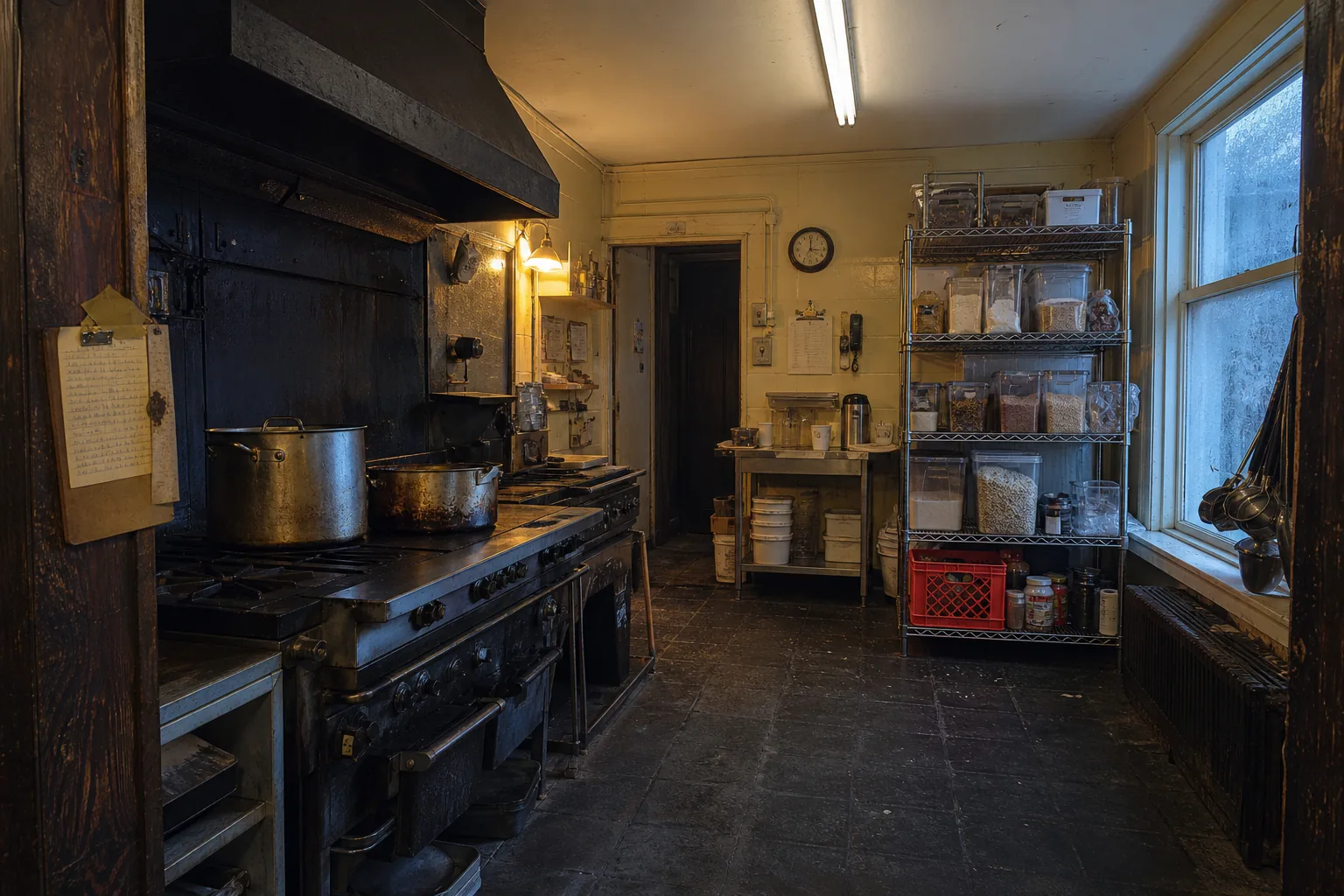
There is a moment when a pan has reduced enough to look extremely pleased with itself.
The liquid is glossy. It catches the light. A spoon comes out lacquered.
It reduced by half, which sounds like a decision.
Then it goes on the plate and tastes like a very expensive salt lick.
Or it runs under the food and disappears.
Or it sits in a thick dark comma beside a piece of fish that never asked for any of this.
None of that means your stock was bad.
It means the reduction was a process and the sauce was supposed to be a function.
Reduction concentrates a liquid; a sauce has to do a job for a dish.
The two often arrive together.
Stock, wine, juice and pan drippings all become glossy by losing water, and that’s a genuinely useful transformation when the base has enough flavor to carry it.
It is not, on its own, a plan for the plate.
Evaporation makes everything more insistent
Reduction removes water. Salt, sugar, soy sauce, cured meat, cheese and stock concentrate all stay exactly where they were.
Take 400 ml down to 200 and you have roughly doubled the concentration of every one of them.
That isn’t a warning against reduction. It is the reason reduction works.
It is also why a sauce can turn glossy, intense and slightly alarming all at once.
The browned flavor concentrates, and so does the salt the stock brought with it, and so does the acid the wine brought with it.
This is how a good stock becomes a lacquer.
So the useful question at that moment is not whether the liquid has reduced enough.
It is whether the dish wants this much concentration.
Some dishes deliberately use a hard-reduced jus with almost no adjustment. That is a decision about a plate, not an applause line for evaporation.
Body has to answer to the food beside it
Thin sauces pour freely and season. Medium sauces coat a spoon. Thick sauces mound, spread, or hold their shape.
Those are movements, not a ranking.
Thick belongs where clinging is the work. Pasta, fries, roasted vegetables, sandwiches. A dipping sauce needs enough body to cling without burying what you dipped.
A thin finishing sauce can pool around a delicate fish, glaze a roast, moisten a plate, and never pretend to be gravy.
The same quantity behaves differently depending on its structure.
A glossy reduction coats nothing like a tomato purée, before either one has met the food. Which is why “make it thicker” is not one instruction.
A roux gravy or a slurry gains viscosity from hydrated starch, and can get substantial without concentrating any salt at all.
A purée gains body from solids. An emulsion gains it from dispersed fat.
Each of those solves a different problem.
For pasta, starchy cooking water and vigorous tossing make a temporary emulsion that helps the sauce hold on.
For a plate sauce, you reduce or mount until it coats the spoon. For leaves, a thin vinaigrette coats because you agitated it.
The pan does not get a vote on which one you need.
The food does.
A spoon is a poor witness
A sauce on its own is a tiny private jurisdiction. There is no pasta drawing moisture out of it. No crisp crust to soften.
No roast contributing its own salt and fat.
No vegetable asking for a little lubrication rather than a full weather system.
So dip the food, not the spoon.
If the sauce slides off the pasta, it may want coating body rather than more time.
If it buries a delicate ingredient, it is too thick or too concentrated.
If it tastes salty next to the food, the reduction has already told you the truth.
This works because it tests the thing you are actually going to serve. It’s also kinder than declaring the sauce a failure.
A reduction can be excellent and still be the wrong answer for tonight. A vinaigrette cannot replace a cream sauce in a gratin without changing the dish.
Cream cannot become a vinaigrette’s cold bright contrast on a salad by wishing hard. Two delicious sauces can be structurally wrong substitutes for each other.
The name of a dish contains a service arrangement
A sauce accompanies or coats something else. A soup serves its liquid as the main event. A stew holds a more substantial relationship between solid and liquid.
A braise depends on browning first and covered liquid after.
Those are not quality tiers. They are different contracts.
Calling a thin jus elegant does not make it useful when the dish needed coating body.
Calling a heavy sauce luxurious does not make it right for delicate vegetables that wanted herb oil and nothing else.
A long-cooked tomato ragù and a raw tomato salsa share an ingredient and do opposite work.
One gives warm integration. The other brings volatile aroma, crisp texture and bright acid at the very end.
So choose the sauce after you have worked out what the food is missing.
Salt, brightness, lubrication, heat, aroma, cohesion.
Not after deciding that a shiny pan deserves a destination.
Temperature finishes the structure
The temperature a sauce is served at is part of what it is.
Hot sauces thicken as they cool. Cold emulsions stiffen. Cheese sauces go grainy when overheated.
Butter sauces split under a boil.
Fresh herbs and delicate oils lose their aroma if you hold them over heat.
So the sauce you tasted boiling at the stove is not necessarily the sauce that reaches the table.
A raw herb sauce belongs at the end, because heat dulls its color and its scent.
A simmered gravy served cold congeals.
A reduction can usually be made early and reheated.
Beurre blanc, hollandaise, vinaigrette and fresh herb sauces are better made close to service, when their texture is the thing you are selling.
There is no prize for making the sauce early if it has become a different sauce by dinner.
Taste it with the plate
When the reduction looks ready, reserve a little rather than announcing victory to the whole pan.
Dip the food it is meant for. Taste it at the temperature it will be served at.
Notice whether it coats, pools, glazes or vanishes. Whether it makes the food clearer or only louder.
Whether the salt and the sweetness and the fat and the acid still agree with each other. If the answer is no, you still have a component.
It may want a little more reduction.
It may want unsalted stock, or fat, or acid, or a starch, or simply a different place on the plate.
That isn’t indecision. That is the work.
The pan will happily keep going, glossy and confident, right past the point where it was any use to you.
Somebody has to be the one who tastes it against the fish.